

Robots Inter-Press Grippers
Robots Inter-Press Grippers for Transfer Between Dies
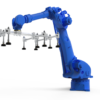
Robots inter-press grippers carry the part from one die to the next. In other words, they are the tooling at the end of the transfer robot’s arm. Specifically, the gripper lifts the formed part out of one press and releases it in position at the following press. Moreover, it has to do so at the line’s full stroke rate, cycle after cycle.
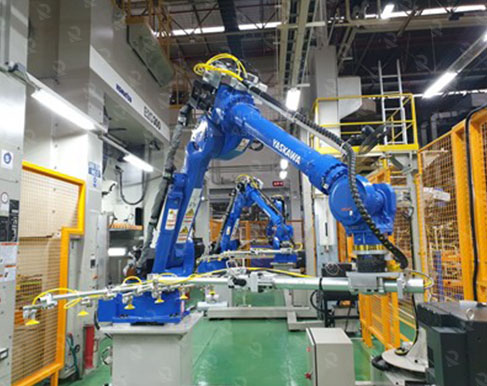
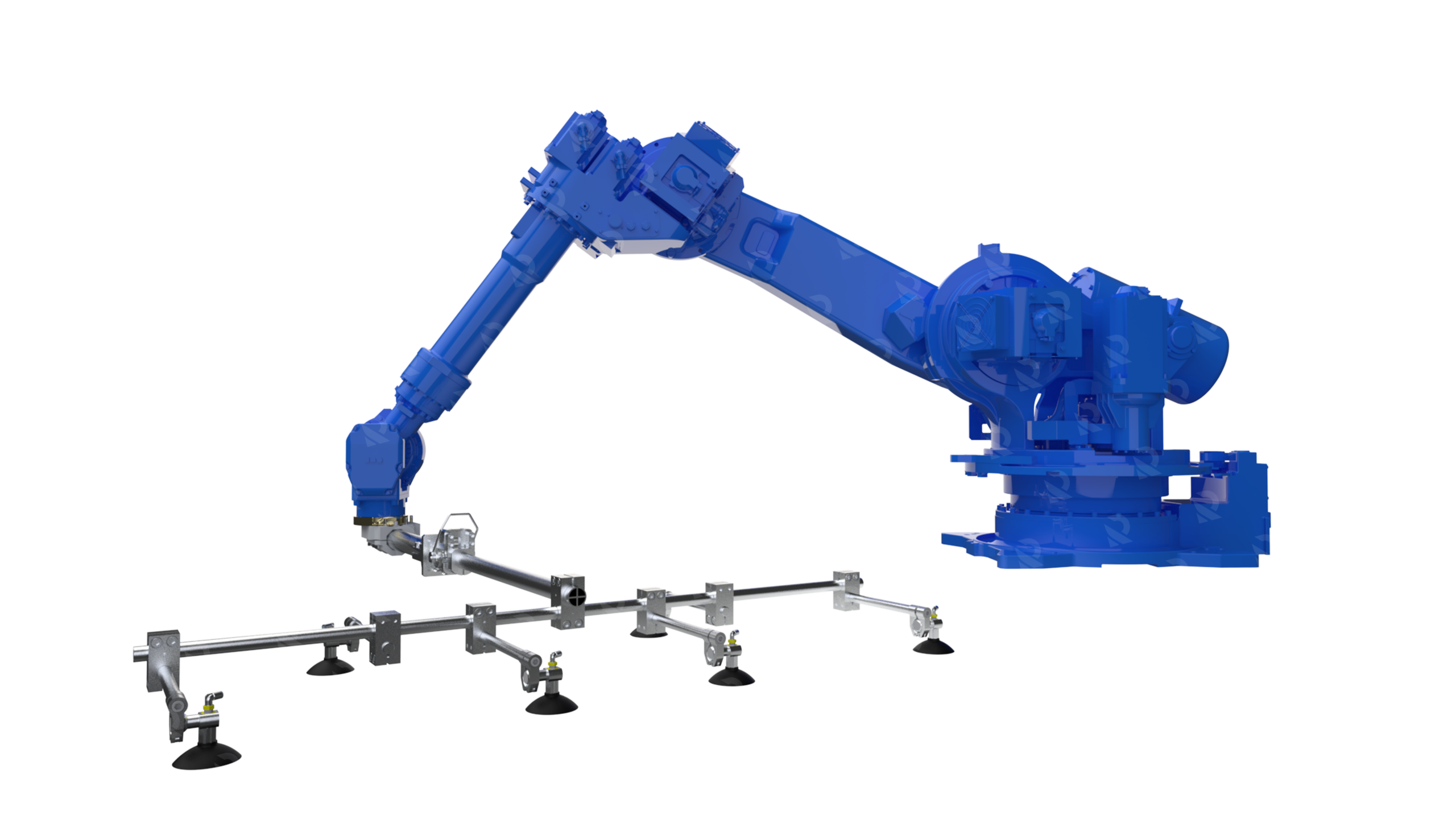
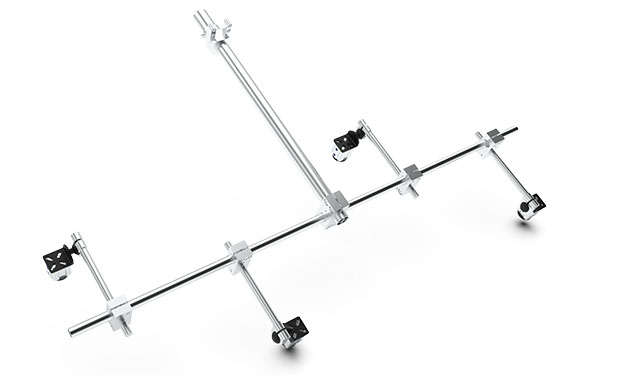
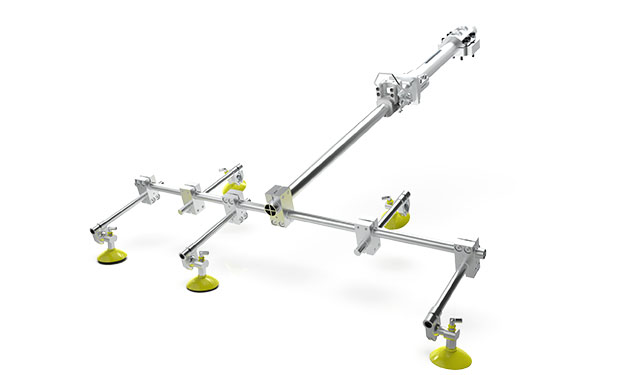
Robots inter-press grippers carry the part from one die to the next. In other words, they are the tooling at the end of the transfer robot’s arm. Specifically, the gripper lifts the formed part out of one press and releases it in position at the following press. Moreover, it has to do so at the line’s full stroke rate, cycle after cycle.
What Inter-Press Grippers Have to Handle
A formed part is not a flat blank. Instead, it carries curves, flanges and holes, so a flat vacuum pad alone will not hold it securely. For that reason, inter-press grippers combine several gripping methods on one frame. Furthermore, the frame itself follows the actual part geometry. Consequently, we build each gripper for one part family rather than selling it off a shelf.
That is also why we do not publish a fixed specification table. Every gripper takes its size, weight and layout from the customer’s own part. Tell us what you are forming, and we will design the gripper to suit it.
Gripping Methods on One Frame
Vacuum cups suit large, smooth surfaces such as body panels. Mechanical fingers, on the other hand, grip flanges and edges where a vacuum seal is not possible. Meanwhile, magnetic grippers hold steel parts quickly and tolerate forming oil on the surface. In practice, most robots inter-press grippers mix all three on the same frame, placing each one where the part will take the load.
Transfer Gripper Weight and Die Change
Gripper weight counts against the robot’s payload. Therefore, every kilogram saved on the frame is a kilogram available for the part. Lightweight frames in aluminium profile or composite tube keep that figure down. In addition, a quick-change coupling lets one robot run several part families. As a result, a die change no longer stops the line while an operator swaps grippers by hand.
See also the other stations in the line: robots press line automation, robot de-stacker grippers and gravity centring device.
Talk to Us About Your Parts
Every gripper design starts from the part drawing, not from a catalogue. Therefore, send us your part geometry, material and weight together with your press spacing. Then our engineers will propose a gripper frame and the quick-change interface for your robot. Finally, note that robot safety in press applications follows the ISO 10218 standard.