


7-Axis Robot Press Line Automation
Robotic Transfer Between Stamping Presses
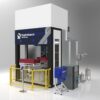
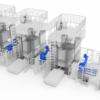
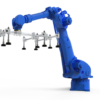
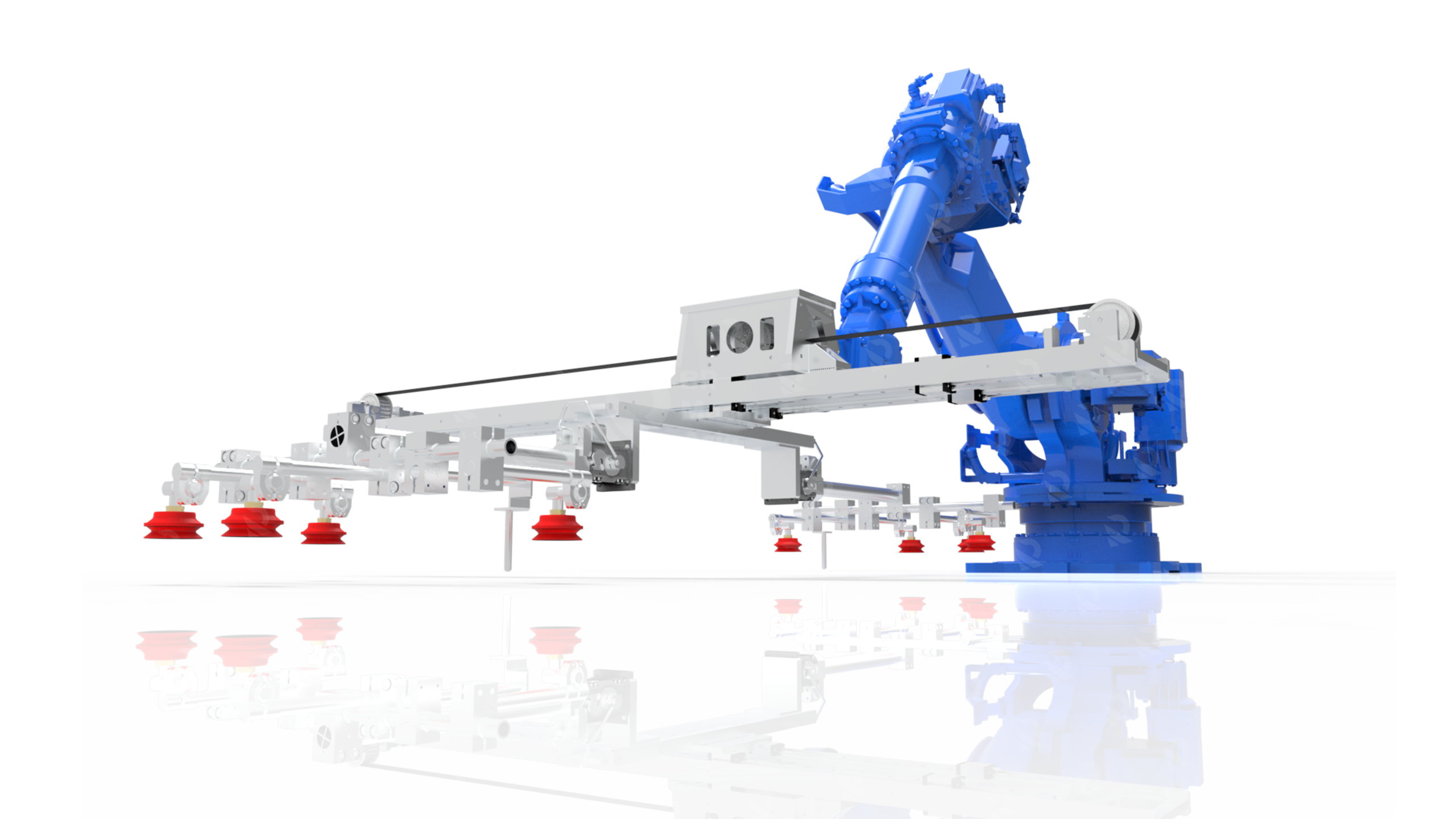
Press line automation replaces manual part handling between stamping presses with a coordinated robot system. Specifically, a 7-axis robot travels along a linear rail mounted between presses. Consequently, it picks a blank or a formed part from one die and places it into the next with repeatable accuracy — cycle after cycle, shift after shift.
Why Press Line Automation Needs a 7- Axis
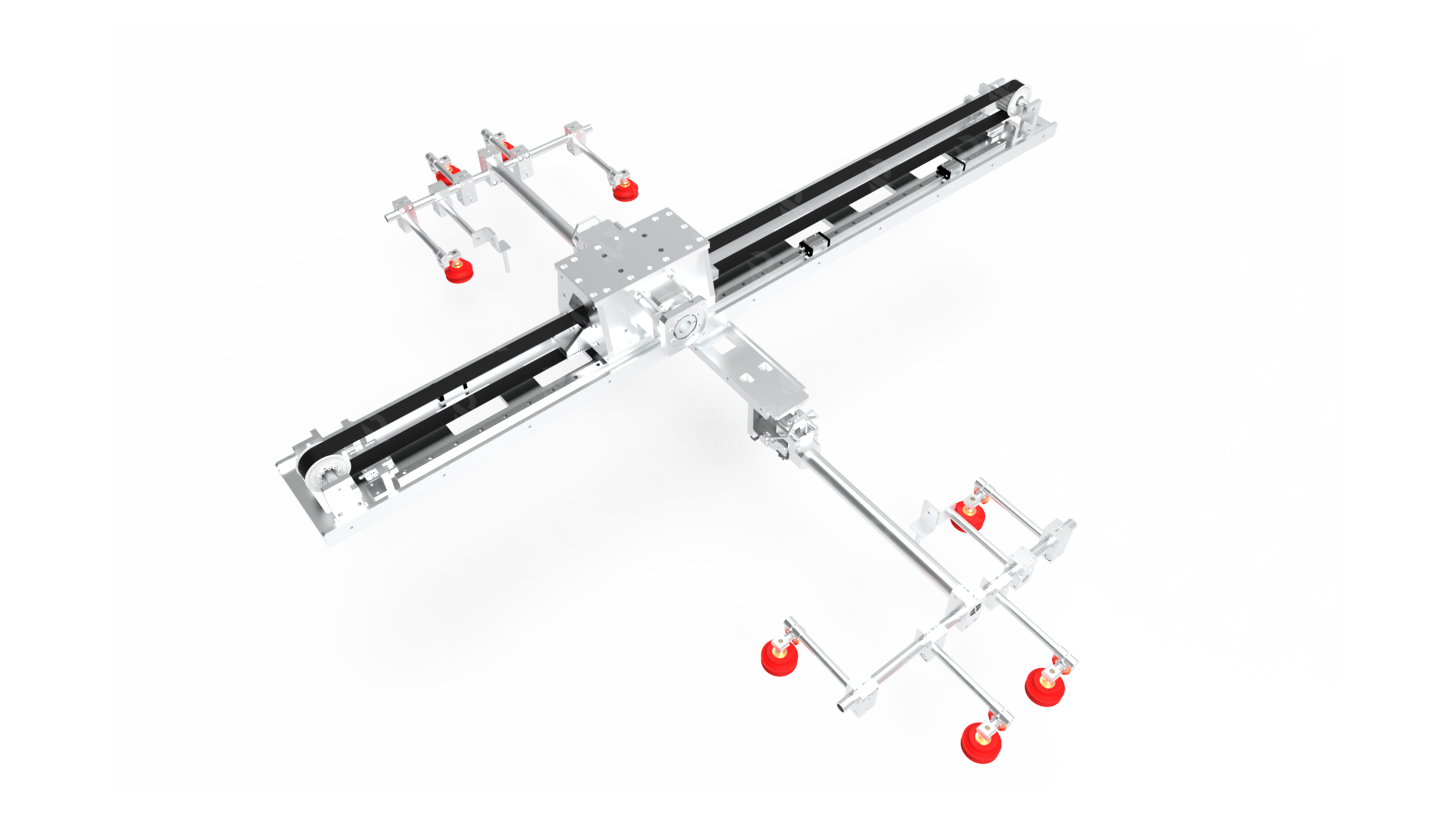
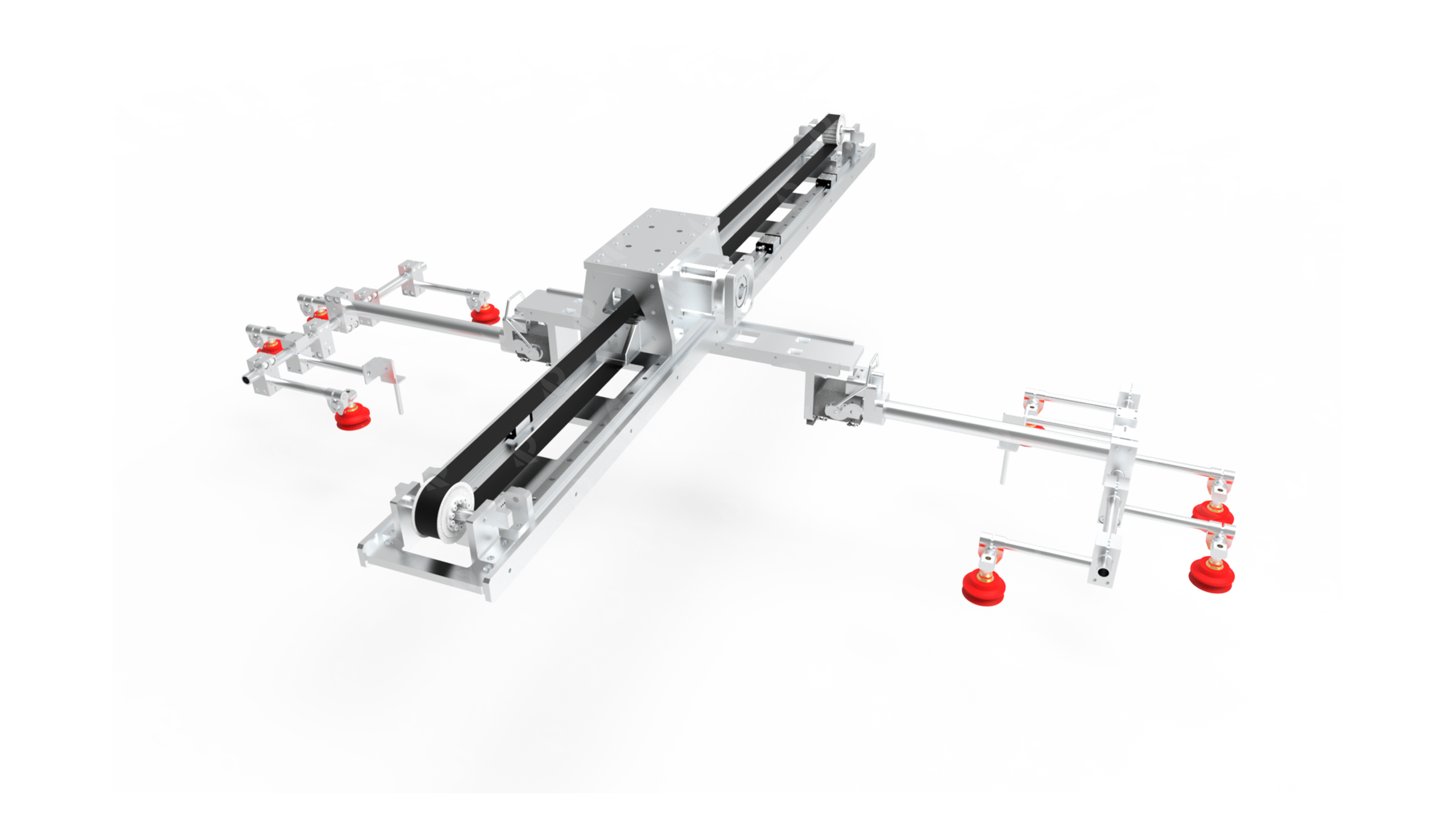
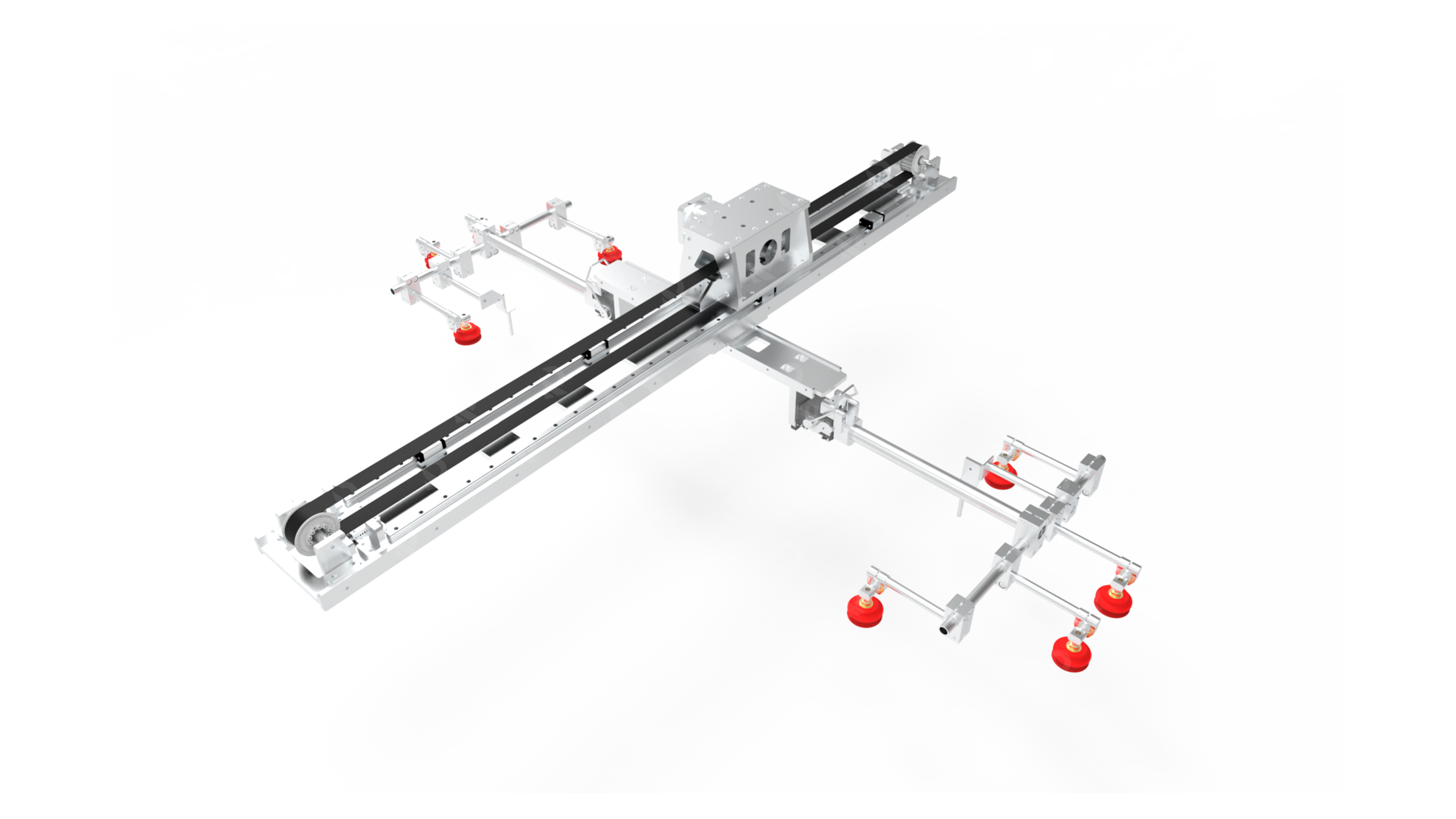
A standard 6-axis robot is limited by its reach. However, presses in a tandem line sit 4.5 to 6.2 metres apart, so that reach is simply not enough. Therefore, a seventh axis adds 1,500 mm of linear travel and lets one robot serve the full gap between presses. As a result, the transfer path gets shorter, the stroke rate rises, and die change becomes easier.
Specifications
| Press Capacity | 1,000–3,000 ton |
| Press-to-Press Distance | 4,500–6,200 mm (center to center) |
| Payload Capacity | 25–50 kg |
| 7th-Axis Travel Range | 1,500 mm |
| Mounting Configuration | 6-axis robot mounted on a 7th-axis linear rail |
What You Gain from a Robotic Press Line
- Higher output — because transfer timing stays consistent, the line runs closer to its rated stroke rate.
- Fewer operators — in addition, staff move from repetitive loading to inspection, die setup, and line supervision.
- Better safety — as a result, no hands enter the die area during normal production, one of the highest-risk tasks in any stamping plant.
- Less scrap — moreover, repeatable placement means fewer misfeeds, double-hits, and damaged dies.
Typical Stamping Automation Applications
Automotive body panels, chassis brackets, and appliance housings all suit this system. For example, plants running tandem presses with mixed part families gain the most. Above all, a robot line stays flexible where die change frequency makes a hard transfer system impractical. Furthermore, robot safety in press applications follows ISO 10218 for industrial robot systems.
Talk to an Engineer About Press Line Automation
Every press line is different. Spacing, die height, part geometry, and target stroke rate all shape the right configuration. Therefore, send us your line layout and part drawings. In short, our team will propose a system sized to your actual cycle time target.