

What Is AMR?
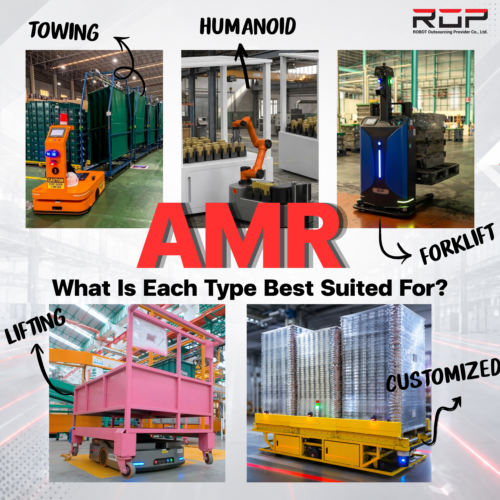
As industries move toward Industry 4.0, automation and robotics are playing an increasingly important role in improving production efficiency. One technology that has rapidly gained popularity is AMR, or Autonomous Mobile Robot. An AMR is a self-navigating mobile robot that can transport materials within a factory without requiring continuous human control.
Today, AMRs are widely used in industrial factories, warehouses, hospitals, and distribution centers. They help reduce labor costs, improve workplace safety, and increase the accuracy and efficiency of material transportation.
What Is AMR?
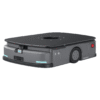
AMR (Autonomous Mobile Robot) is a self-driving mobile robot that can make decisions and navigate independently. It uses modern technologies to understand its surroundings, detect obstacles, and adjust its route in real time. This allows AMRs to work safely alongside employees in industrial environments.
Key Technologies Commonly Used in AMR Systems Include:
- LiDAR SLAM Navigation
- AI Navigation
- Sensor Fusion
- Safety Scanners
- Vision Systems
How Does an AMR Work?
AMRs use sensors and navigation systems to create a real-time map of the factory environment. The robot then calculates the most suitable route to reach its destination. It can automatically detect and avoid people, forklifts, and other obstacles while moving safely through the facility.
Benefits of AMRs in Industrial Factories
- Reduces manual labor for material transportation
- Improves workplace safety
- Reduces forklift usage inside the factory
- Makes production layout changes easier
- Supports Smart Factory operations
- Improves efficiency and continuity across production processes
How Is an AMR Different from an AGV?
AMRs differ from traditional AGVs (Automated Guided Vehicles) because they do not require magnetic tape or QR codes to be installed on the factory floor. This gives AMRs greater flexibility, allowing routes and production layouts to be changed more easily. AMR systems are also better suited for future expansion and changing factory requirements.
AMR vs. AGV Comparison
| Topic | AMR | AGV |
|---|---|---|
| Navigation | AI + LiDAR SLAM (no floor infrastructure required) | Requires magnetic lines / QR codes / floor tape |
| Flexibility | Very high, routes can be adjusted in real time | Low, follows fixed routes |
| Obstacle Avoidance | Automatically detects and avoids obstacles | Stops and waits or may require human assistance |
| Installation | Easy, with minimal factory modification | More complex and may require floor modifications |
| System Expansion | Easy to scale by adding more robots | More difficult and may require new route installation |
| Cost | Higher initial cost but can provide better long-term value | Lower initial cost but may include additional installation costs |
| Best Suited For | Factories with frequently changing layouts or shared workspaces | Factories with fixed layouts and repetitive transport routes |
FAQ (Frequently Asked Questions)
Q: What is the difference between AMR and AGV?
ROP: AGVs rely on fixed guidance systems installed on the floor, such as magnetic lines or QR codes. This means their routes are relatively fixed. AMRs use technologies such as AI and LiDAR to create maps and navigate independently. They can adjust routes in real time and automatically avoid obstacles.
Q: What types of factories are suitable for AMRs?
ROP: AMRs are suitable for facilities where layouts change frequently, employees share the same working areas, or flexible material transportation is required. Typical applications include manufacturing plants, warehouses, hospitals, and distribution centers.
Q: Is AMR installation difficult? How much factory modification is required?
ROP: AMRs are generally easier to install than traditional AGVs because they do not require guide paths to be installed on the floor. The robot can scan and create a map of the facility, helping minimize modifications and reduce disruption to existing production operations.
Q: Are AMRs safe enough to work alongside employees?
ROP: Yes. AMRs can be equipped with Safety Scanners and sensors to detect people and obstacles around the robot. They can automatically reduce speed or stop when a person or obstacle enters the safety zone. AMR systems can also be designed to comply with applicable international safety standards.
Q: What is the ROI of an AMR?
ROP: The ROI depends on factors such as workload, operating hours, labor costs, and the level of automation required. In many applications, AMRs can help reduce labor costs, improve safety, and increase production efficiency. The actual payback period should be calculated based on the conditions of each factory.
Examples of AMR Applications
Today, AMRs are widely used across many industries, including:
- Pallet transportation within factories
- Integration with conveyor automation systems
- Raw material transportation between production lines
- Automated warehouse systems
- Logistics and distribution center operations
ThaiPollutech – AMR and Industrial Automation Specialist
ThaiPollutech provides complete AMR and Industrial Automation design and installation services. We also offer customized solutions tailored to each customer’s actual site requirements, helping factories improve efficiency and move toward Smart Factory operations.