

5 Signs It's Time for Your Factory to Switch to AMR
Rising labor costs, tougher competition and expensive downtime are changing how factories move materials. Here are five clear signals that manual transport and forklifts are holding your operation back.
Read the 5 signs ↓Free consultation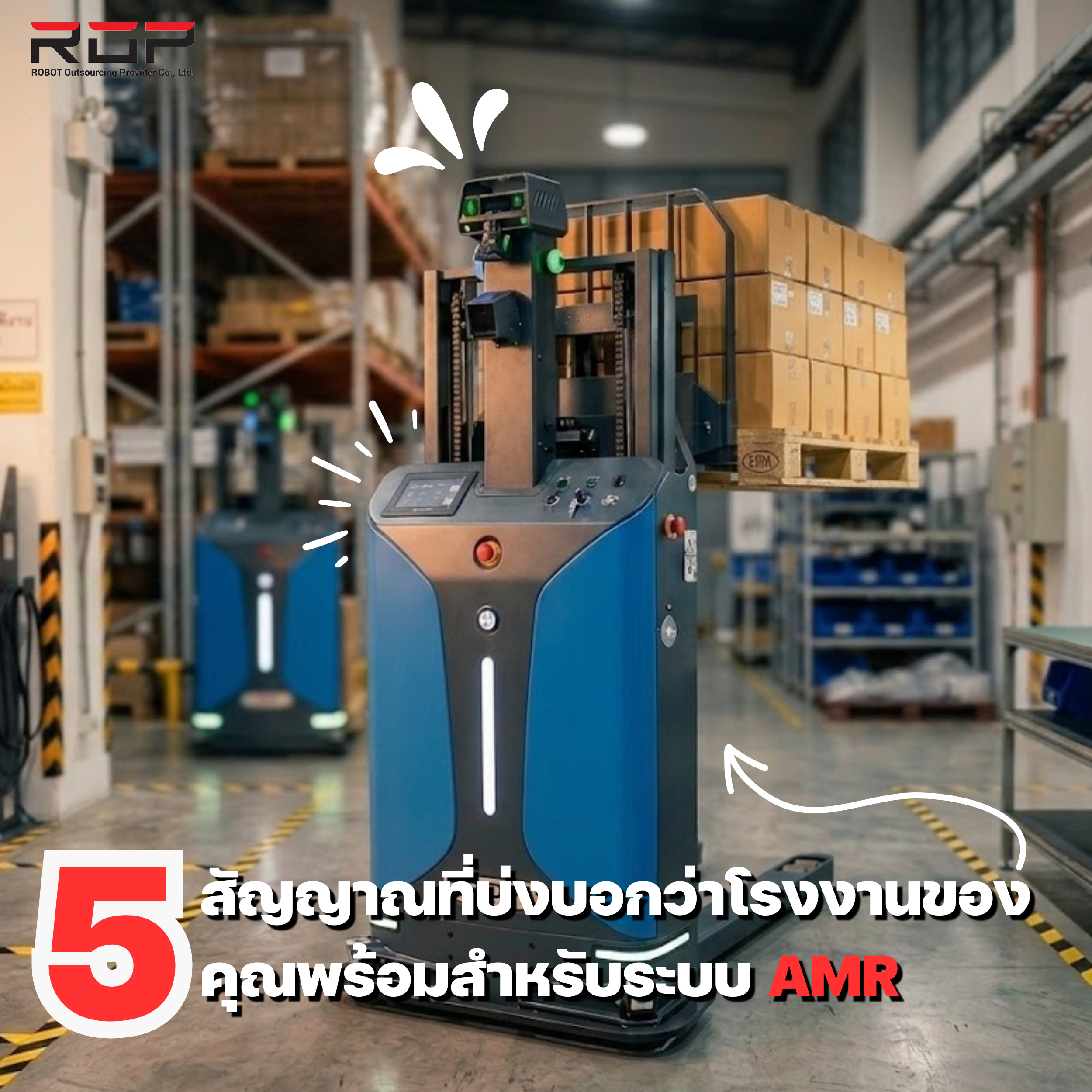
Many factories still rely on forklifts and manual labor to move materials around the plant. These methods worked in the past — but today, with labor costs rising, competition intensifying and even a single day of downtime carrying a real price, those old processes are no longer just "not enough". They are holding your factory back every single day.
If your factory shows any of the following signs, the question is no longer "Should we switch?"
Does your factory show any of these signs?
You transport materials along the same routes, again and again, every day
Let's be direct: do you have employees or forklifts shuttling goods between the same points all day long? If so, you are paying salaries for work that no longer needs a person.
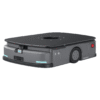
Repetitive transport on defined routes is the sweet spot for AMRs. The system learns the routes, plans its trips and works continuously 24 hours a day — no days off, no leave, no overtime — while your people move on to work that truly adds value to the business.
Several forklifts are running the same routes
And that safety risk can never be 100% controlled. Multiply it all by several forklifts, and the total is bigger than you think.
Modern AMRs come with 360° safety scanners that detect people and obstacles in real time, stop instantly, and comply with the international safety standard ISO 3691-4 — so they can work safely alongside employees in the same area.
Labor costs rise every year, but productivity doesn't move
Minimum wages go up every year, workers are harder to find every year, and turnover in material-handling jobs is higher than in other roles. Every time you train a new hire, you pay the same cost again without gaining anything.
AMRs don't have these problems. Once installed and set up, they work immediately — consistently and with the same efficiency every day. Factories that replace repetitive transport tasks with AMRs can significantly reduce cost per transport and typically achieve payback within 1–3 years.
Forklift accidents or near misses happen often
Forklift accidents are not just bad luck — they are a signal that a risk in the system has not been managed. The impact doesn't stop at injuries: it includes production stoppages, compensation costs and damage to your company's reputation.
Bringing in AMRs doesn't mean getting rid of every forklift. It means reducing forklift use in areas where many people work together, and letting AMRs handle the repetitive routes instead.
You plan to move toward Smart Factory and Industry 4.0
If your organization aims to become a Smart Factory, waiting until you are "more ready" means losing time you can never get back. AMRs are the best starting point for factory automation because they connect with ERP, MES, WMS, conveyors and other automated machines — linking data and in-plant logistics in real time.
Most importantly, there is no need to tear out your existing systems. Investing today lays a foundation you can expand and build on in the future.
See even one sign? It's time.
We understand that investing in an AMR system is not a small decision. That's why ThaiPollutech provides on-site surveys and analysis, plus an AMR demo tested in your actual factory area before you decide — so you can clearly see how AMRs will help your operation and how long the payback will take.
Because a good investment starts with the right data — not with selling something that doesn't fit your real site.
Find out if your factory is ready for AMR
Talk to our team about your routes, loads and layout. We'll recommend the right AMR and estimate your payback period.