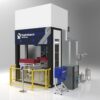
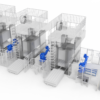
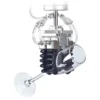


A paint supply system prepares the paint, feeds it to the application equipment and handles the color change automatically. Thaipollutech builds these systems for special colors and small-batch supply, because every color change there costs paint, solvent and production time. In addition, pigging technology recovers the paint left in the line. As a result, you lose less paint, and a central dump system collects the rinsing media.
What a paint supply system does
The paint supply station sits between the paint container and the applicator. First, it prepares the paint. Then, it delivers the paint to the spray booth and runs the flushing sequence whenever the color changes.
In a conventional setup, however, solvent flushes out the paint left in the line at each color change, and that paint is lost. Consequently, the more colors a paint shop runs, the more paint, solvent and time it consumes. Our system keeps those losses low while production stays fast.
How the paint supply system changes color
- Supply. Paint flows from an electro-polished stainless steel container through the line to the applicator.
- Recovery. After the job, compressed air drives a pig, a close-fitting plug, through the line. In other words, the pig pushes the remaining paint back for reuse.
- Rinsing. Next, solvent, flushing media and air clean the line.
- Collection. A central dump system then collects the used rinsing media.
- Next color. Finally, the next color fills the line. The whole sequence runs automatically.

Watch the paint supply system in operation
For example, the video below shows a fully automated color change. You can also watch the video on YouTube.
Advantages of our paint supply system
- Lower material cost. Each color change uses little paint and solvent. Moreover, pigging recovers material for reuse.
- Faster changes. The color change is fully automated, so material changes are quick and convenient.
- Reliable process. Level monitoring keeps the process stable. Besides, the container is electro-polished stainless steel.
- Easy to run. Operation is intuitive, and the system integrates easily into existing processes.
- Built for you. We design each system to the customer’s requirements. Therefore, process optimization and cost reduction improve economic efficiency.
Applications
This equipment suits paint shops that run many colors or frequent small batches, for example:
- Special and low-volume colors supplied alongside the main colors
- Robotic and automatic painting lines that change color often
- Upgrades to existing lines where color change losses are high
Paint supply system technical data
| Rinsing medium | Solvent, flushing media, air |
|---|---|
| Compressed air | Filtered air, ø 12 mm, 8–10 bar |
| Material | Stainless steel, Teflon |
| Dimensions | 927 x 542 x 1,700 mm |
| Pigging technology | ø 12 mm |

Related equipment
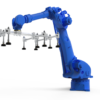
The station works together with our paint robots and automation and paint applicators. Furthermore, we can build it into a modular paint system. See our project references for completed paint shops, or visit spare parts for service items.
Frequently asked questions
What is a paint supply system?
It prepares paint and delivers it from the container to the applicator in the spray booth. In addition, it runs the flushing sequence when the color changes.
How does pigging reduce paint loss?
Compressed air drives a close-fitting plug, the pig, through the line. Because the pig pushes the leftover paint back for reuse, less paint goes to waste, and cleaning needs less solvent.
What utilities does the station need?
It needs filtered compressed air at 8–10 bar through a ø 12 mm connection. It also needs solvent or flushing media for rinsing.
How much space does the station take?
The station measures 927 x 542 x 1,700 mm.
Can it be added to an existing paint line?
Yes. We design each system to the customer’s process, so it integrates into existing lines.
What happens to the used rinsing media?
During the automated color change, a central dump system collects them.
Talk to a paint shop engineer
Tell us how many colors you run, how often you change them and what your line looks like today. After that, we will propose a paint supply system sized for your process.